
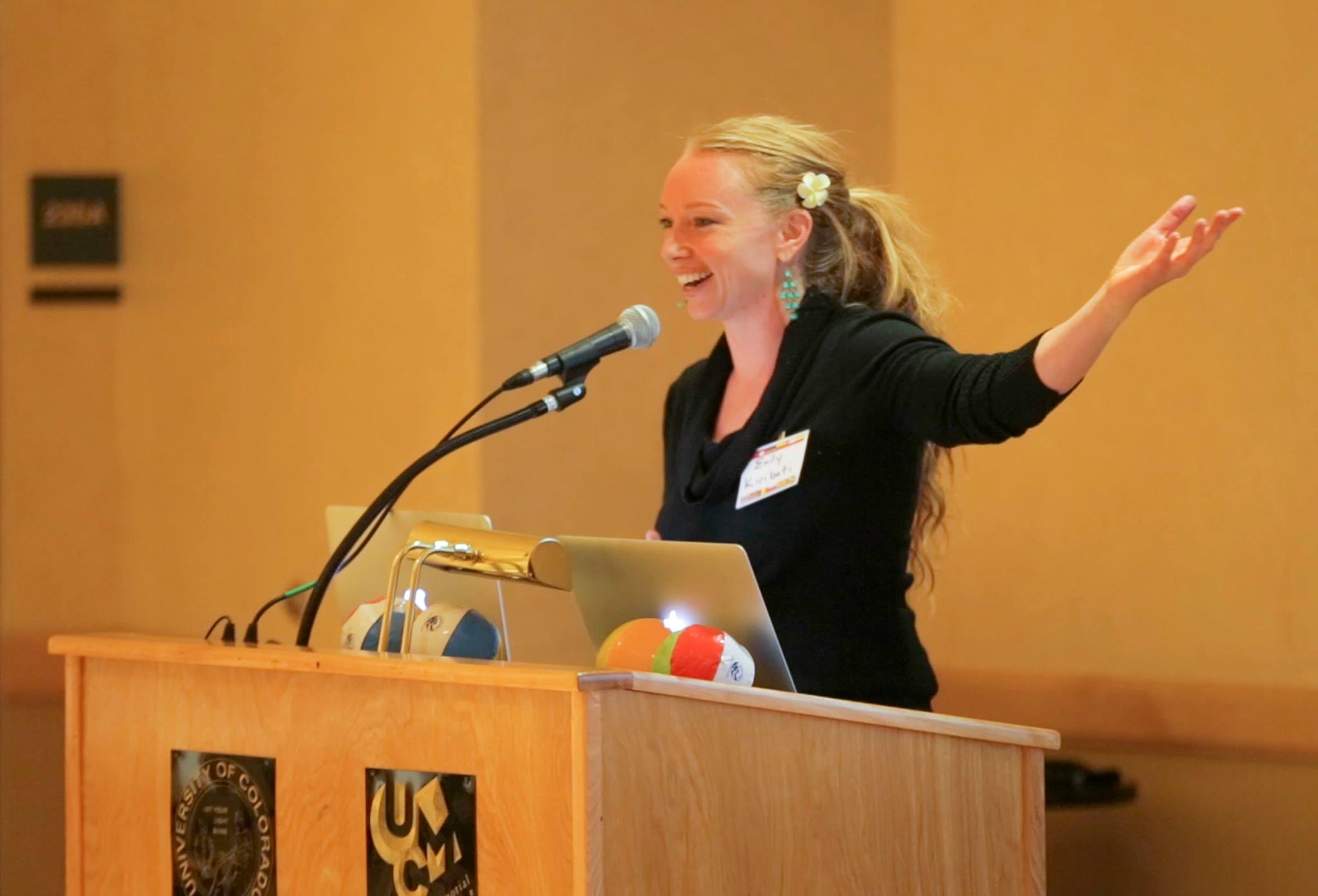
For 25 years, I have been teaching communication.
Some people call me a communication expert. I still feel slightly uncomfortable with that phrase. If expert means someone who has devoted decades to testing, refining, failing at, and rebuilding approaches to communication across cultures and industries, then perhaps it applies. If it means someone who does not write run-on sentences, then perhaps it does not apply. But that label has never given me permission to tell someone exactly what to say.
In fact, it has done the opposite.
In the early 2000s, I was captivated by large-scale communication models. The very first communication workshop I gave was in rural Nepal on a semester program I led for U.S. American youth. In the small library we carried with us, I found a model for communication that helped shed light on some group dynamic challenges we were facing. The workshop was a hit, and a fire was lit in me. I went on to study Nonviolent Communication. I read about Crucial Conversations. I practiced them in my own life. Through these models, I learned hard and valuable lessons about taking ownership of the part I played in conflict. This was a great start.
And yet, as I began leading communication workshops internationally, something unsettled me.
These models worked beautifully in certain rooms. In others, they seemed clunky and awkward. I began to see that many of the communication frameworks that are sold as universal are, in fact, deeply Anglo-American. They assume particular relationships to power, emotion, hierarchy, and individuality.
I could feel it in the room before I could articulate it. These models were so much of a stretch that they increased stress for some people instead of solving for it. My deep resolve that I had “found the solution!” started to dissolve into “this is way more complex than I thought.”
In 2008, I went back to school to get two masters degrees related to communication and culture. Along the way, I enrolled in a course titled Critical Intercultural Communication. At the time, I honestly assumed “critical” meant important. Little did I know it meant examining communication through the lens of power.
That course rearranged my thinking.
I began to notice how small words carry enormous weight. The difference between power over and power with. Between thinking for someone and thinking with them. The prepositions began to matter more than the scripts. It became clear to me that communication is not primarily about getting the sentence right. It is about understanding the relational field in which the sentence lands.
Words are powerful, yes. But they are also unstable. Ask ten people what “growth” means and you will receive ten definitions shaped by life experience, culture, and context. When I coach leaders around values, I always ask them to define their terms. Otherwise, we are operating on assumed agreement.
After graduate school, I started ReFresh Communication, LLC and taught at institutions like the National Fire Academy and the Colorado Housing and Finance Authority. I was brought in by Qatar Petroleum and the Rocky Mountain Medical Reserves Corps. These professionals were not interested in abstract conversations. These were leaders with KPIs, public accountability, and operational pressure.
They were patient with theory. For about ten minutes.
Eventually, someone would lean forward and ask, “But how? How do I actually do this? How do we build trust when we can’t even get on the same page?”
Those questions stayed with me. How could I translate ideas that took me years to grasp into short workshops?
Over the next decade, I worked to translate the abstract into something usable. Something that did not collapse under pressure. Something that accounted for culture, context, and the very real experience of a human nervous system under stress. I created and tested many approaches, each one inching me toward something better.
And still, I never taught scripts.
I do not teach scripts because words land differently depending on history and hierarchy. Because scripts often only resonate with part of a room. And because when things are tense, our brains do not calmly retrieve memorized checklists. Under pressure, we default.
Faced with collaboration challenges, what leaders actually need is not better sentences. They need better calibration.
Over the last few years, especially in the wake of COVID and the intensified polarization that followed, I have felt the urgency of this more clearly than ever. Leaders are navigating social fracture, political volatility, burnout, and shifting expectations of authority. They don’t need more on their plates. They need clarity.
So I (finally) streamlined my work. What has emerged is The Leadership Dials ©: A Calibration System for Leaders Under Pressure.
Many leadership models are too generic to guide real-time decision-making. Many DEI frameworks are experienced as abstract or compliance-driven, disconnected from the daily reality of leading teams under pressure.
This framework is different.
It is not a growth model that asks you to maximize every skill at once. It is a regulation model. Leadership effectiveness is not about doing more of everything. It is about knowing what to turn up or down in the moment.
Here is the reality: under pressure, we all have defaults. We over-reflect or over-act. We over-connect or over-assert. We stay with conversations too long or rush the room forward.
In the process of being kicked around for the last 25 years, I have realized that the work is learning to notice and recalibrate. That is what I have been building toward.
It is with great joy that I want to invite you to the first public offering of the Leadership Dials © in April. This will be a focused 90-minute session for emerging and established leaders navigating complexity, titled “Calibrating How We Lead in Complex Times.”
In this session, you will:
-
See the map of the three leadership dials
-
Identify your most common miscalibration under stress in one dial
-
Apply one dial to a real workplace scenario
-
Leave with one deliberate shift you can implement immediately
If you have ever left a meeting thinking, “That felt unfinished,” or “We moved too fast,” or “I lost myself in that conversation,” this work will give you a map for what happened and how recalibrate in real time the next time.
Leadership is not about the right script. It is about calibrating yourself, your relationships, and the room.
Calibrating How We Lead in Complex Times
April 29 | 12–1:30 PM MT
Early Bird Price: $49
